Egyptian Revival architecture in STL
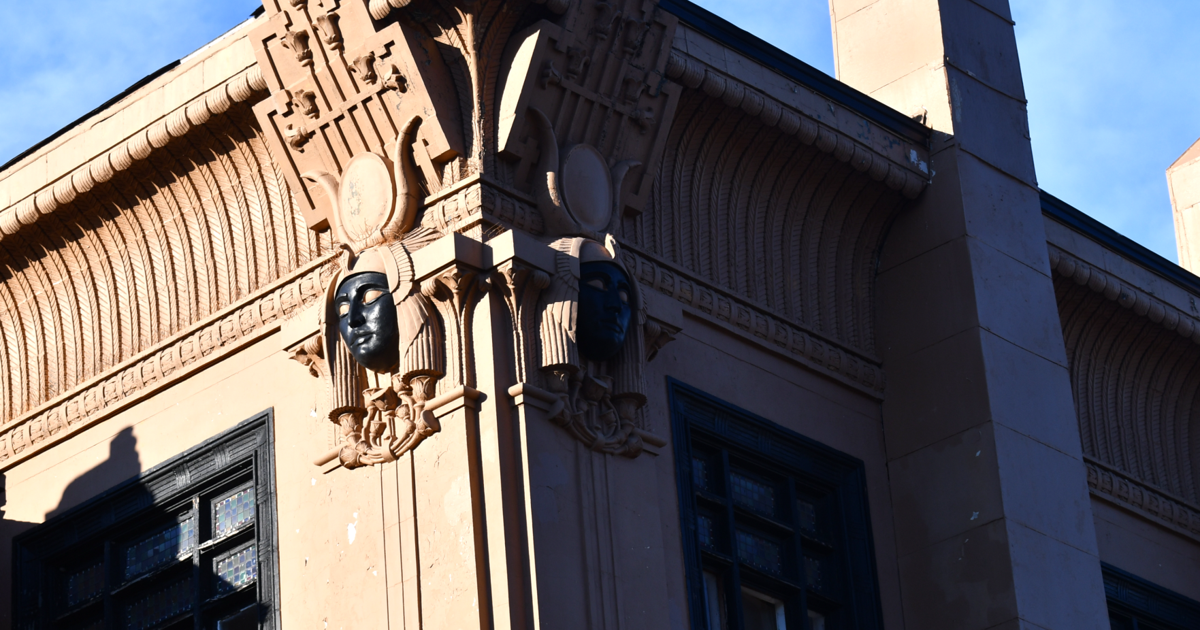

Photo by Emily Standlee
Many structures in Ancient Egypt were monuments to the most lauded figureheads of the time, and they themselves are monumental in size and scope. These pyramids, tombs, and temples call to mind symbols of power and a ritualistic interest in both the cosmos and the afterlife.
Similar to St. Louis’ layers of structure and form, iconic Egyptian architecture – think the Great Pyramid of Giza and the Sphinx – evolved into hieroglyphics-covered obelisks; columns topped with carved papyrus, symbolizing rebirth; decorative friezes; pylons, or tall stone gates, depicting deities; colonnades and roofed courtyards; and other examples of extraordinary engineering and design.
People are also reading…
Worlds away in St. Louis, the stoic marble obelisks of Bellefontaine Cemetery echo Ancient Egypt’s respect for the dead – including the Tate Mausoleum, guarded by stone sphinxes at its entrance. Sphinxes also make an appearance atop the grand Civil Courts Building downtown, which sports a pyramid-shaped roof.

Photo by Emily Standlee
The golden-hued building at 3200 Natural Bridge Ave. – aka Mount Moriah Lodge No. 40, once a Masonic lodge – is a rare case of well-preserved Egyptian Revival-style architecture in the city. Its obelisk-framed entrance mirrors an Egyptian pylon or gate, and pharaoh heads and winged globes, associated with royalty, flank its roofline. “Combining elements of the Temple of Karnak at Luxor, it shows the interest of Americans in the Egyptian world after the discovery of the tomb of King Tutankhamen in the early 20th century,” writes Chris Naffziger in his online blog, St. Louis Patina.

Photo by Emily Standlee
Built in 1913 and designed by lodge-member and architect Henri Rusch, Mount Moriah balances form and function. “Rusch’s façade obelisks were not merely decorative – they housed a ‘ventilation scheme, ensuring the circulation of pure air when windows [were] closed,’” writes Ruth Keenoy in a 2018 newsletter for the Society of Architectural Historians. “The idea of utilizing oversized, imposing…obelisks to frame a recessed, tomblike entrance was pure Egyptian Revival, but to do so in a manner where they rose dramatically above the structure itself appears to be an American twist.”
No doubt, the otherworldly pull of Ancient Egypt influenced secret societies like the Freemasons in the structures they created. In St. Louis, even in its rarity, the style evokes an intriguing connection between present and past.
link