How Frank Lloyd Wright’s Architecture Evolved Over 70 Years and Changed America
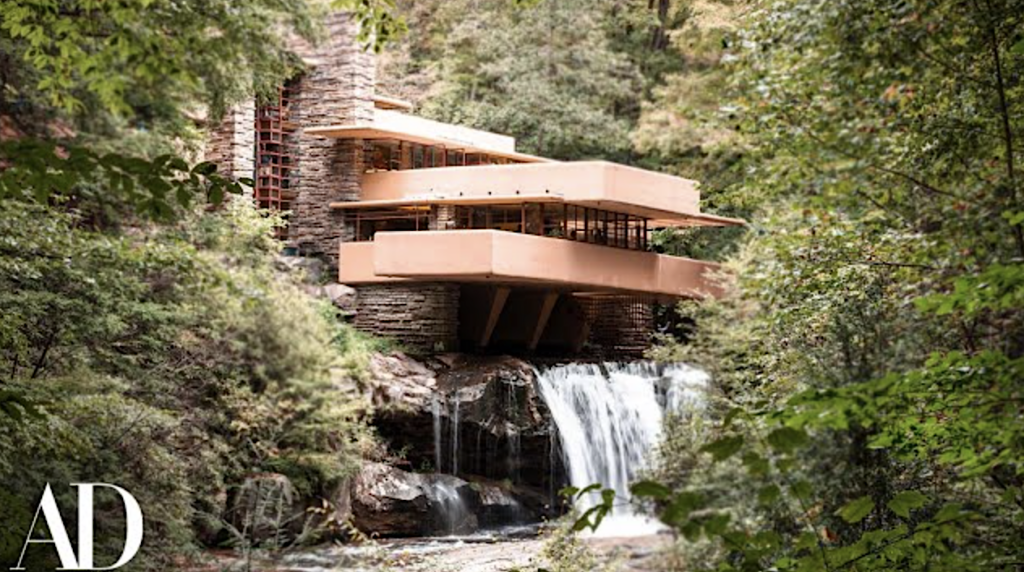
In the new Architectural Digest video above, Michael Wyetzner talks about a fair few buildings we’ve featured over the years here on Open Culture: the Imperial Hotel, the Ennis House, Taliesin, Fallingwater. These are all, of course, the work of Frank Lloyd Wright, who still stands as the embodiment of American architecture more than 65 years after his death. That’s a fairly long stretch by modern standards, but nevertheless a shorter one than Wright’s career, which ran over 70 years. During his long life, Wyetzner explains, Wright witnessed the introduction of indoor plumbing, electricity, the telephone, the automobile, the airplane, the radio, television, and space travel — and even given that, his architecture shows a dramatic evolution.
Beginning with Wright’s apprenticeship in Chicago under Louis Sullivan, “the father of modernism,” Wyetzner continues on to his development of the horizontal indoor-outdoor “Prairie Style” house; his Japanese commissions and subsequent much-photographed Los Angeles houses; the emergence of his philosophy of “organic architecture” meant to unify the building with its site and natural environment; his discovery of the desert; and his Depression-era conception of the “Usonian house,” which adapted his refined spatial sensibility for American-style mass production. This would be more than enough for even the most distinguished architect’s career. Yet it doesn’t even get around to such projects as the Unity Temple, Johnson Wax Headquarters, the R. W. Lindholm Service Station, the Solomon R. Guggenheim Museum, or his first and last doghouse.
No matter which period of Wright’s career you examine, you can find evidence for his belief in the inspiration of place, in organic aesthetics, in structural expressiveness, and even in indirect moral instruction. Yet it’s also possible to imagine that, in some sense, a series of different Frank Lloyd Wrights existed, repeatedly destroyed and recreated by professional setback, personal disaster, foreign sojourn, immersion in a new landscape, or even acquaintance with a new technology. Surely no one could remain productive to the end of his 92 years without a little re-invention. During that time, he designed more than 1,000 projects, only about half of which were ever built. Young architects who idolize Frank Lloyd Wright would do well to remember that he, too, knew full well the sting of never making it to construction.
Related Content:
How Frank Lloyd Wright Became Frank Lloyd Wright: A Video Introduction
Frank Lloyd Wright Creates a List of the 10 Traits Every Aspiring Artist Needs
That Far Corner: Frank Lloyd Wright in Los Angeles – A Free Online Documentary
Frank Lloyd Wright: America’s Greatest Architect? – A Free Streaming Documentary
What Frank Lloyd Wright’s Unusual Windows Tell Us About His Architectural Genius
What It’s Like to Work in Frank Lloyd Wright’s Iconic Office Building
Based in Seoul, Colin Marshall writes and broadcasts on cities, language, and culture. His projects include the Substack newsletter Books on Cities and the book The Stateless City: a Walk through 21st-Century Los Angeles. Follow him on the social network formerly known as Twitter at @colinmarshall.
link