Scientists Create a New Building Material Using Just Soil, Water, and Recycled Cardboard

In a Melbourne lab, a team of engineers may have triggered a pivotal shift in the global construction industry. Researchers from RMIT University have developed a new building material made entirely from soil, water, and recycled cardboard—eliminating the need for cement. Designed for low-rise buildings, the material is structurally sound, widely accessible, and significantly less polluting than conventional concrete.
Cement, the essential binder in concrete, accounts for nearly 8% of annual global carbon dioxide emissions, according to data cited by the United States Environmental Protection Agency. While alternatives have been explored for decades, none have struck the elusive balance between affordability, durability, and environmental performance—until now.
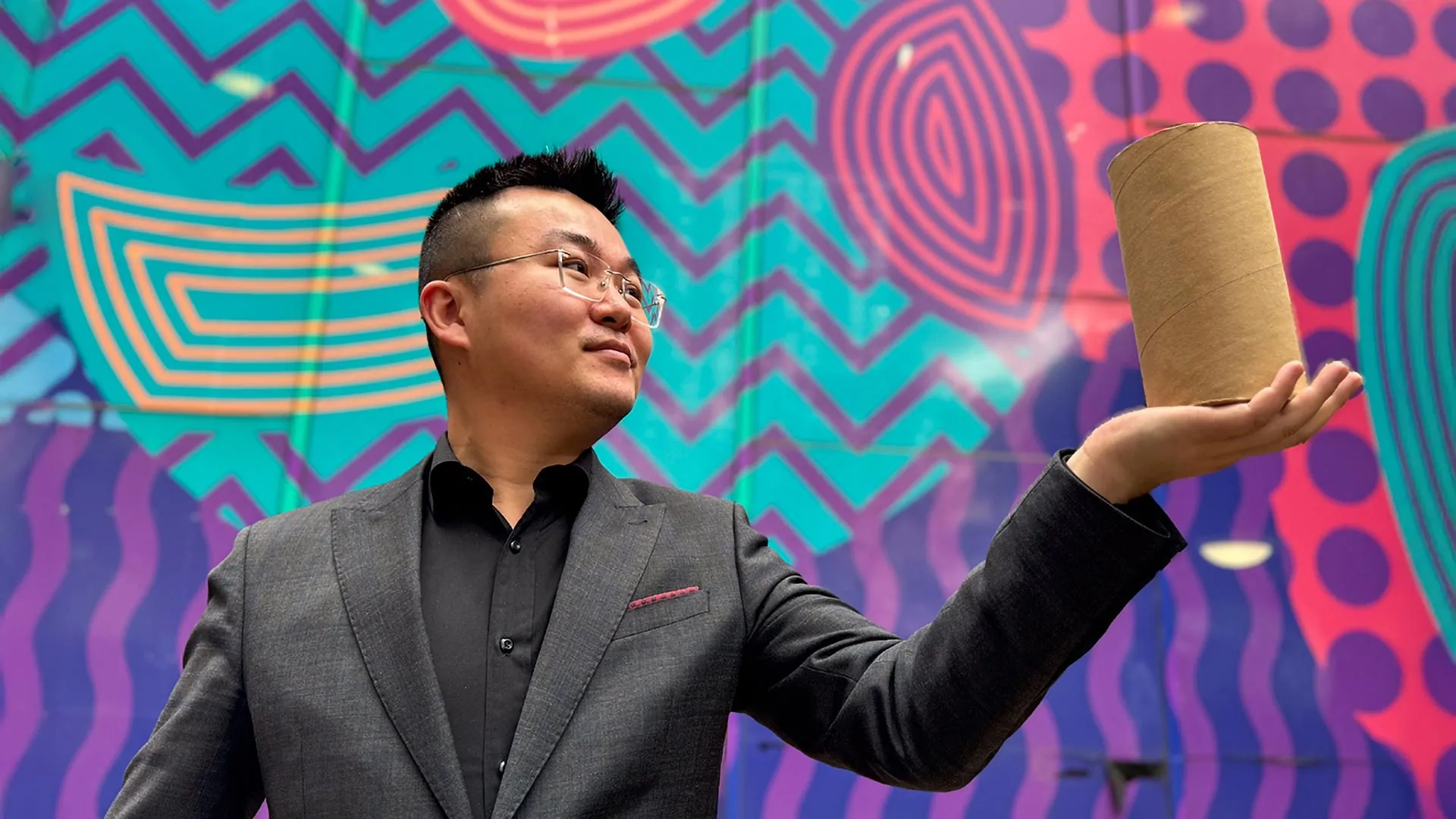
Dubbed cardboard-confined rammed earth (CCRE), the new material fuses compacted soil with discarded cardboard tubing to form a low-tech but resilient wall system. The research team reports that this approach delivers one-quarter the carbon footprint of concrete and costs less than one-third as much to produce.
Initial testing suggests the material could thrive in hot, resource-limited regions where energy-intensive building materials are impractical. But beyond geography, CCRE represents a potentially systemic shift—one that rethinks the raw inputs of modern construction.
Concrete’s Carbon Problem Meets a Stripped-Down Alternative
Traditional rammed earth techniques have been used for thousands of years, compressing moist soil into solid forms. In modern applications, however, cement is usually added to meet structural standards—nullifying many of the environmental advantages.
“Modern rammed earth construction compacts soil with added cement for strength. Cement use is excessive given the natural thickness of rammed earth walls,” said Dr. Jiaming Ma, lead author of the study, in an interview published via ScienceDaily.

By wrapping the compacted soil in cylindrical cardboard tubes, Ma’s team found they could maintain strength without any cement at all. The result is a structural envelope that prevents cracking and supports vertical loads without high emissions or industrial processes. The material is also fully recyclable and reusable, meaning waste produced during construction could be minimized or entirely avoided.
In Australia alone, over 2.2 million tons of paper and cardboard are sent to landfill annually. Redirecting even a portion of that waste into CCRE construction could yield substantial environmental and economic benefits. The full technical analysis is available in the peer-reviewed journal Case Studies in Construction Materials.
Site-Made, Lightweight, and Ready for Deployment
According to the research team, CCRE can be produced directly on site by compacting a soil-water mix inside the recycled cardboard molds. The process can be carried out manually or using low-power mechanical equipment, eliminating the need for centralized factories or heavy transport.

“Instead of hauling in tonnes of bricks, steel and concrete, builders would only need to bring lightweight cardboard, as nearly all material can be obtained on site,” said Emeritus Professor Yi Min ‘Mike’ Xie, corresponding author of the study, as quoted by ScienceDaily.
This streamlined supply chain could make CCRE especially valuable for remote regions with poor infrastructure or limited building resources. It also fits within broader trends of localized, low-carbon construction—particularly in countries facing housing crises amid climate change.
CCRE’s thermal properties add to its utility in hot climates. Rammed earth is known for its high thermal mass, which helps regulate indoor temperatures and humidity. As Ma noted, “Rammed earth buildings are ideal in hot climates because their high thermal mass naturally regulates indoor temperatures and humidity, reducing the need for mechanical cooling and cutting carbon emissions.”

Material strength is governed by the thickness of the cardboard tubes, a variable the team has already modeled. This modularity allows for customization across building types and structural requirements. For higher-performance applications, the researchers have tested a version incorporating carbon fiber to reinforce the earth matrix—demonstrating strength levels comparable to advanced concrete.
A Real-World Pivot Point for Construction
The implications of CCRE stretch well beyond its humble components. As reported in the RMIT research repository, the team is already seeking industrial partnerships to pilot real-world applications. With building sector emissions under growing scrutiny, governments and developers alike are under pressure to find workable, low-emission alternatives.
Unlike many speculative green innovations, CCRE appears immediately actionable. It doesn’t depend on rare materials, expensive technologies, or long supply chains. Its core components—dirt, water, and waste—are ubiquitous. That simplicity could prove its greatest strength.
The research aligns with a wider movement toward nature-based building materials, such as hempcrete and mycelium composites, both of which have attracted global interest for their low-carbon profiles. Yet CCRE stands out for its practicality: it can be mixed, molded, and assembled on the spot.
link