Supply constraints and exports help stabilize margins, says Doman CEO
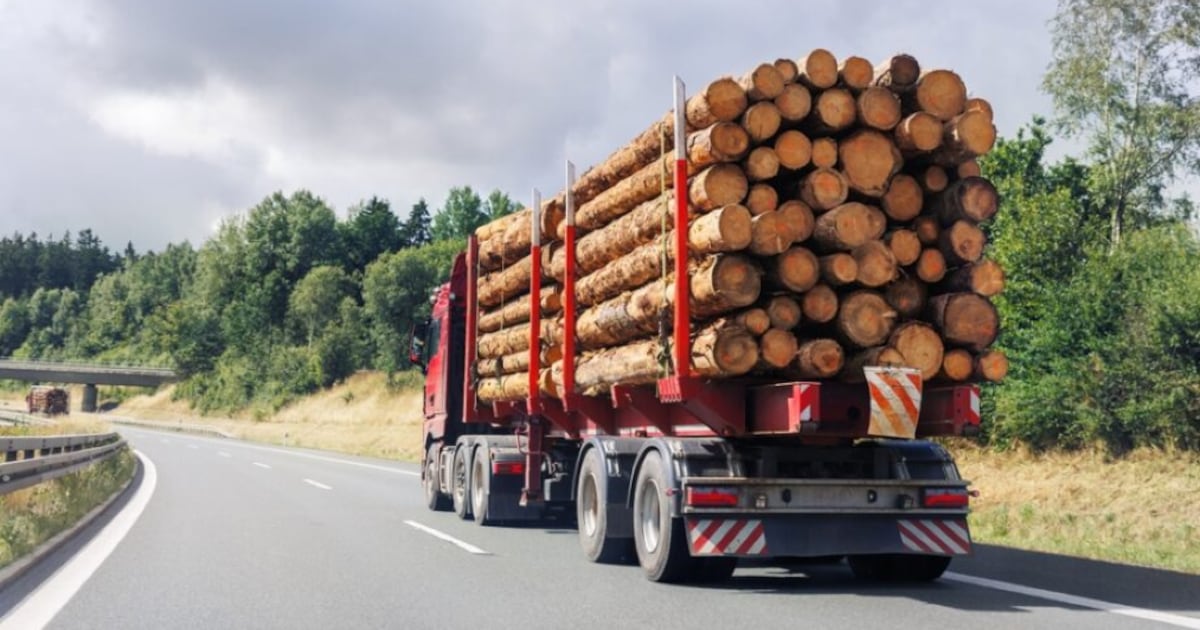
Revenue at Doman Building Materials missed estimates in the third quarter as lumber prices stayed weak. CEO Amar Doman says the company’s strong cash flow, tight cost controls and steady export demand helped offset the market’s challenges.
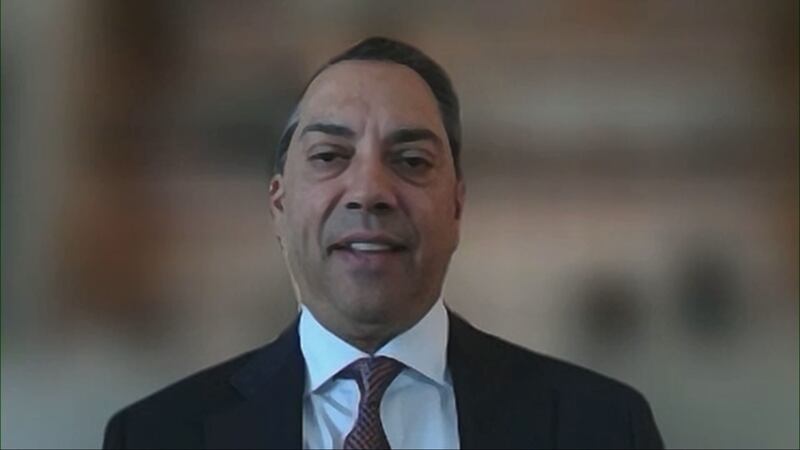
BNN Bloomberg spoke with Amar Doman, CEO of Doman Building Materials, about the company’s balance-sheet improvements, reduced debt load and plans to pursue new acquisitions starting in 2026.
Key Takeaways
- Doman Building Materials’ Q3 revenue rose 20 per cent year over year but missed estimates due to weak lumber prices.
- CEO Amar Doman says steady export demand and supply shortages have eased pricing pressures.
- The company reduced debt by nearly $200 million this year and holds $400 million in liquidity.
- Doman plans to resume M&A activity in 2026 after completing asset sales and deleveraging.
- Tariffs have boosted U.S. operations, where the company is investing in new facilities.
Read the full transcript below:
ROGER: Okay, revenue at Doman Building Materials missed estimates in the third quarter. The Vancouver-based company’s CEO says that despite market volatility, production costs, supply shortages and steady export demand have softened some of the negative pressures on pricing. Here to tell us more is Amar Doman, CEO of Doman Building Materials. Amar, thank you very much for joining us.
AMAR: Appreciate it. Thanks for having me on.
ROGER: How would you sum up this quarter for you? There’ve been a lot of challenges this year alone. How would you sum up this quarter?
AMAR: Yeah, I think we exceeded our expectations as far as margin goes. We held the line there in a very, very difficult pricing environment. You’ve seen the major forestry guys are bleeding red ink, and the lumber market was down. You know, the print market, which kind of publishes pricing, is very different from what’s going on in the cash markets. The market has been very soft, so in a very challenging environment, we came through, I believe, very well and maintained, you know, the higher end of our margin profile at 15.5 per cent, and reduced our debt by almost $200 million so far this year. So we’re doing a great job on the balance sheet in a very tough environment as well.
ROGER: And how did you manage to do that, given the current situation?
AMAR: Yeah, a couple of things. One, strong operating cash flow with good margins, good operating metrics, turning our inventories fast, not getting caught up and piling things up, drove our working capital down. We sold our timberlands in B.C., which brought in about $75 million and went right to debt reduction. So we’re in good shape. We’ve got about $400 million in liquidity now, and we’ll go back on the M&A hunt starting in 2026.
ROGER: And you’re running your free cash flows at about 17 per cent. Is that sustainable to you?
AMAR: Yeah, it is. And, you know, our dividend payout ratio is in the 30s, so we’re going to leave our dividend alone — 62 straight quarters of our dividend now. We’ll leave that alone and continue to just drive strategic investments, whether that’s debt reduction or M&A activity. With the strong balance sheet we have, we’ll continue to drive that forward.
ROGER: And with any potential headwinds — West Fraser closing two mills in B.C. — what kind of impact does that have?
AMAR: Yeah, West Fraser is a good partner of ours. You know, we hate to see the malaise that’s going on in forestry right now. I think things will get better over time, but right now, with the severe tariffs in place — even with a very weak Canadian dollar — making it work on Canadian lumber going south is very difficult for us. We’re still okay as far as the supply chain goes, but we hate seeing some of our key partners have to shut down. These are small towns, and it’s painful, but hopefully things will get better next year. It seems like the penalties are so severe on these tariffs that maybe something will give there too. They’re just too harsh. And sometimes, when we see that with Mr. Trump, maybe these things will back off. Let’s hope that happens.
ROGER: And with the tariffs, how are you weathering them? You mentioned you’re not too affected, but how are you weathering them?
AMAR: Yeah, you know, we’ve been very fortunate. We press-released last year, when the administration changed, that we don’t really cross the border with a lot of lumber. One of our divisions does a little bit, but really, it’s a non-event for us. What we don’t like about the tariffs is kind of like all of us — I would say it’s just, you know, the consumer is a little bit hesitant on doing things and worried about jobs, and the sentiment isn’t good. But a direct tariff impact doesn’t hurt Doman here.
ROGER: But down the road, any concerns that it might carry over to you?
AMAR: No, we just don’t. Our strategy isn’t cross-border. We’re very local with the products we produce. We have 37 lumber-treating plants, we have specialty sawmills, we have remanufacturing, we have distribution. And our strategy isn’t cross-border, so, you know, we’re a good story there, thankfully.
ROGER: And you’ve acquired some assets — Hixson and Tucker. How’s that fitting in?
AMAR: Really well. Hixson, based in Dallas, covers basically the Gulf all the way up to the Great Lakes. And then you go east to Arkansas. We’ve acquired Tucker Lumber, a very large operation in the Carolinas — three monster facilities — and they’re fitting in very well. The U.S. side has been more steady than Canada, although Canada picked up in the last couple of months here on our building materials distribution. So we’ve seen the consumer not completely go away. Things are okay. I can’t tell you this is an incredible home-run story here, but things are decent for us on both sides of the border, and the acquisitions have gone very well. So I want to thank our team members for that.
ROGER: And any concerns with the big buyers holding less inventory?
AMAR: Yeah, you know, that’s been happening for a while. I think that, you know, the sophistication of our customer base — they’re always trying to drive down working capital, put the pressure on us to make those turns as fast as possible for them so they don’t carry a lot of inventory. They’ve ratcheted things down a little bit more this year. But for us, we just get more efficient ourselves and turn that inventory quicker. Being in a commodity business with a lot of lumber exposure, turning faster is better for all of us. So we’re not as tied to the ups and downs of the lumber markets, which have been painful this year. So we’re turning quick, and that’s evident in our margin profile.
ROGER: It sounds like you actually like the challenge of it, almost.
AMAR: I wouldn’t say we like it. We’d much rather see something steady. But, you know, we’re hitting base hits here — no home runs — and Doman’s having a good year in a tough environment. So we’re doing the best we can through all this noise.
ROGER: It always makes you think. It makes you adapt, right?
AMAR: Well, it does. And COVID — I won’t spend a bunch of time on that — but COVID really taught us how to do more with less. We have a weekly inventory call with all of our key division leaders and, frankly, we focus on inventories, turns, what’s going on in the market. COVID taught us to do that because we had to run a lot more efficiently with a lot less inventory, and we’ve kept those metrics in place since that period of time. It’s accelerated our working capital to a point where we’re turning quicker, our liquidity is wide open, and it’s made us more fit, to your point.
ROGER: And with the tariffs you say aren’t having an impact, what has that made you change? What have you looked at within your systems?
AMAR: Well, you know, certainly for us, looking at the tariffs, we’re not going to acquire any businesses that have cross-border exposure or tariff risks. On the positive side, for a U.S. business, the tariffs that are on South America and Brazil — some of them are up to 50 per cent right now — really bode well for made-in-USA production. And we’re going to continue to invest dollars into our fencing production in the United States. We’re upgrading our mills now. We’re going to put in a new mill, hopefully in the Carolinas soon. So we’re investing in the U.S., in the made-in-USA thing. I think we’ll continue to stick with that even if these tariffs are lightened a little bit. So we’re going to keep investing.
ROGER: So in some ways, the tariffs are paying off for you from your south-of-the-border operations?
AMAR: Correct, correct. We’re getting some benefits as other markets are now effectively closed from coming into the States.
ROGER: Any concerns that you might be caught if they drop those tariffs?
AMAR: Well, you know what? If they come right off, that’s fine. I still think that when we make these investments, customers are going to say, hey, look, we’d rather buy production that’s North American — whether it’s Canadian or American — instead of from these other countries that sometimes have tariffs on, sometimes off. We can’t count on that. You know, the shipping lanes take weeks on the vessels. Why not just buy in the U.S.A., even if it’s a couple cents more per piece? Safe production, you know, keep North Americans employed. And I think those strategies are going to continue to unfold, which will bode well for our company.
ROGER: Okay, Amar, thank you very much for joining us today.
AMAR: Thanks for having me.
ROGER: Amar Doman, CEO of Doman Building Materials.
—
This BNN Bloomberg summary and transcript of the Nov. 7, 2025 interview with Amar Doman are published with the assistance of AI. Original research, interview questions and added context was created by BNN Bloomberg journalists. An editor also reviewed this material before it was published to ensure its accuracy and adherence with BNN Bloomberg editorial policies and standards.
link