Why lunar regolith is the key to construction on the moon
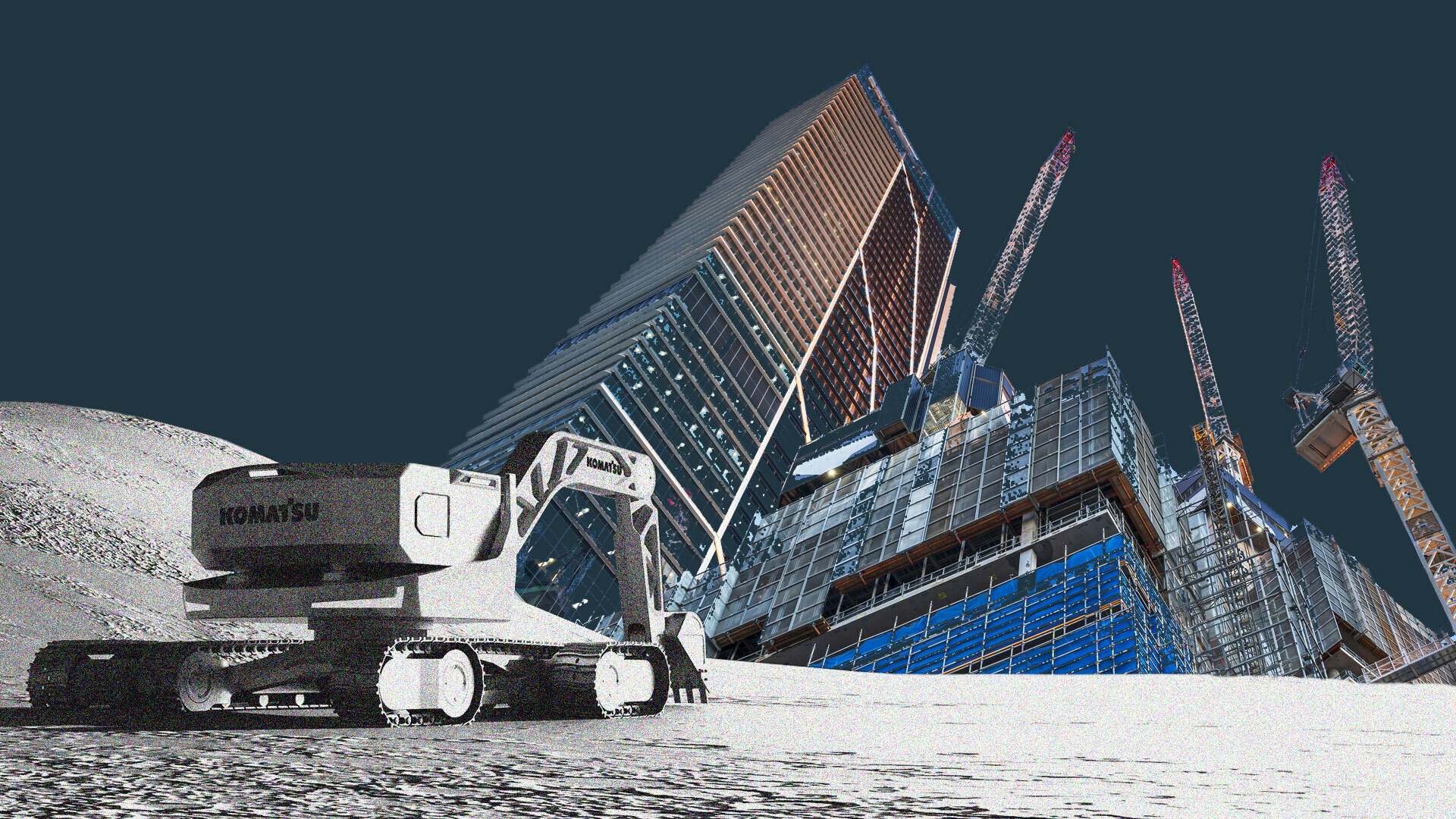
Imagine building a house where the nearest hardware store is 238,606 miles (384,000 kilometers) away and the only material available is the sharp, airless soil beneath your boots.
That’s the challenge future engineers will face on the Moon. With NASA’s Artemis program laying the groundwork for long-term lunar habitation, the success of these plans hinges not on materials flown in from Earth, but on what’s already there: lunar regolith.
Lunar regolith is a surprisingly versatile building material. Scientists believe the grey, fine dust is ideal for brickwork. They also claim it can be hardened to form roads, and materials can be extracted to build solar panels. In other words, it could form the building blocks of vast lunar habitats for future Artemis missions.
As NASA explains, lunar regolith comprises mineral fragments, rock chips, and glasses made from asteroid impacts and ancient volcanic activity.
Building the future
Ignoring its suitability for construction, it is arguably the only realistic choice for building large lunar infrastructure. In 2016, NASA estimated that transporting building materials to the Moon would cost roughly $10,000 per pound ($22,000 per kg). Transportation alone would cost billions of dollars for a lunar base requiring thousands of tons of materials.
“There are alternatives, like transporting materials from Earth, but the costs of doing that are still incredibly high,” Juan Carlos Ginés-Palomares, a PhD in Aerospace Engineering at TU Berlin, explained to Interesting Engineering in an interview. “That’s why we believe that in-situ resource utilization (ISRU), especially using lunar regolith, is the most promising and efficient approach for establishing infrastructure on the Moon.”
Lunar regolith is an abundant material. It covers almost the entire lunar surface, and its depth ranges from roughly four to 15 meters below the surface.
“The idea is to build using what’s already available on the surface, which reduces the need for constant resupply missions and makes permanent habitation more realistic,” Ginés-Palomares continued. “We believe this is the most practical option for building a long-term presence on the Moon.”
That’s not to say space programs won’t transport any building materials from Earth. “A hybrid approach is also possible,” Ginés-Palomares said. “For example, bringing certain high-performance materials from Earth, like specialized binders, could help process regolith into bricks more efficiently or at lower temperatures.”
Other interesting alternatives do exist, but there is a strong consensus among the scientific community. Lunar regolith will form a vital part of future space construction.
“There are quite a few interesting proposals for lunar habitats, from placing them in dormant lava tubes to using material from asteroids, but our team believes on-site materials will at least partially be needed for heavier components and structures,” Cole McCallum, a Mechanical and Aerospace Engineering and Physics junior at the University of Arkansas, told IE. “Building using in-situ resources saves money on fuel and valuable space in rockets, so even portions of a base being built in this way can have a big impact.”
Engineering innovation: Sculpting dust into infrastructure
Beyond lunar habitats, moulding lunar regolith could facilitate transportation to water ice extraction sites near the lunar south pole. In 2023, Ginés-Palomares and his team published a paper on the subject. In it, they detailed how a laser or sunlight-focusing system could melt lunar regolith. This could be utilized to form paved surfaces on the Moon.
“There are several challenges when building with lunar regolith. First, it’s a complex mix of minerals, which makes it difficult to control processing and predict the properties of the final materials,” Ginés-Palomares explained.
“In our case, we’re focusing on melting regolith directly. One major issue is its high melting temperature, typically between 1300 and 1500 °C,” he continued. “If we use lasers or other electric heat sources, the energy requirements become a serious limitation. That’s why we’re proposing the use of concentrated sunlight, harnessed through lenses and mirrors. This approach could drastically reduce—or even eliminate—the energy cost of processing.”
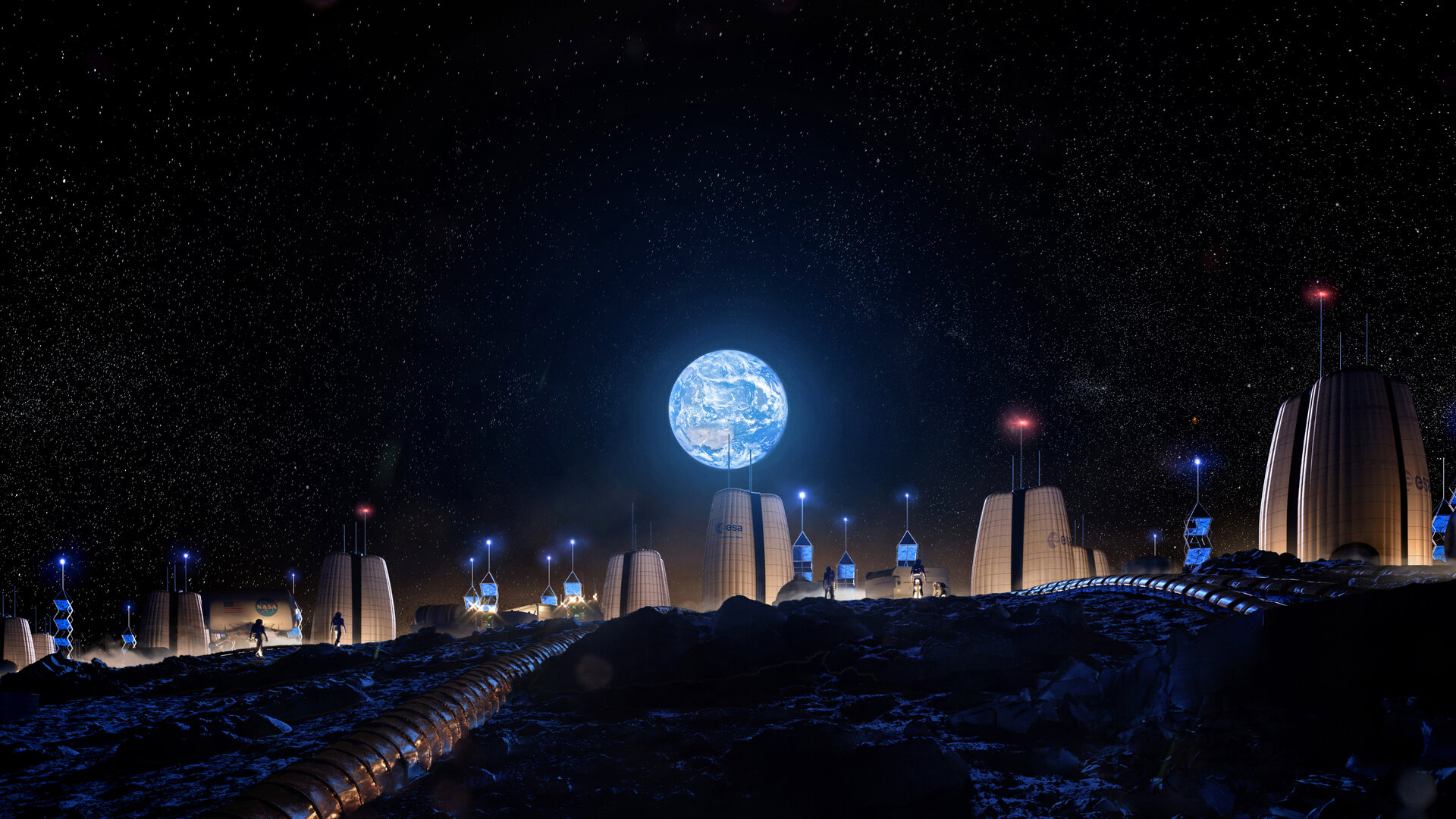
Their team isn’t the only one exploring this method, known as light sintering. McCallum forms part of a team led by Wan Shou, an Assistant Professor in the Department of Mechanical Engineering at the University of Arkansas. Last month, they published a paper on the preprint server arXiv. Their research suggests future lunar explorers could melt regolith using sunlight or lasers. They could then make a host of components via additive manufacturing, or 3D printing.
“In our research, we found that precision structures couldn’t be easily made without a binding agent because of inhomogeneities in the regolith,” McCallum told IE. “We decided to build smaller bricks that we can assemble and reassemble to make larger structures to work around this; however, extra machinery may be needed to assemble these bricks into larger structures on the moon.”
Dangerous dust: Weighing the pros and cons
As Anakin Skywalker once said in the Star Wars prequels: “I don’t like sand. It’s coarse and rough and irritating, and it gets everywhere.” The now-infamous line was widely derided, due in part to actor Hayden Christensen’s overearnest delivery. However, it is a surprisingly apt description of the true perils of space dust. Lunar dust really does get everywhere, and this could pose a real problem for future lunar colonizers.
Lunar dust is very adhesive. It is electrostatically charged due to interactions with solar radiation. This causes it to adhere to machinery and spacesuits, causing serious problems.

In 2020, NASA contacted universities seeking novel ideas to help mitigate the lunar dust problem. At the time, the space agency highlighted the key issues. Tests conducted during the Apollo era showed that lunar dust particles can be less than 20 microns (about 0.00078 inches) in size. It is abrasive and sharp, meaning it can damage spacesuits. It could even get into air filters, posing a real risk of lung damage to lunar explorers.
In a study last year, scientists showed how lunar dust could contaminate crucial water purification systems. Their tests showed that lunar regolith causes pH, turbidity, and aluminum concentrations. All of these exceeded World Health Organization benchmarks for safe drinking water.
What civil engineers are learning
If NASA can overcome these difficulties, building with the lunar regolith could benefit Earth greatly. Though lunar infrastructure won’t directly benefit civilians, the engineering required to build it could have a vast positive impact.
Blue Origin, for example, has developed its Blue Alchemist technology capable of building solar panels using only lunar regolith. A similar technology could use abundant materials on Earth to accelerate the energy transition. Building habitats with lunar regolith could also guide the construction of low-water, low-carbon construction materials for drought-prone or remote areas on our planet.
“Developing building techniques for the Moon pushes us to find new ways of constructing with minimal resources, using local materials, and relying on renewable energy,” Ginés-Palomares explained. “For example, if we learn how to build durable structures using only regolith and sunlight, similar methods could be adapted for remote or resource-scarce regions on Earth. These innovations could help reduce emissions from traditional construction processes and promote more sustainable and decentralized building approaches.”
Engineers already use additive manufacturing to build renewable energy machinery on Earth. According to McCallum, refining 3D printing technology to work in the harsh space conditions could boost its ability to solve crucial problems on Earth.
“Additive manufacturing in general is extremely promising when it comes to reducing the climate impact of construction, as less carbon-intensive materials and methods using electricity from renewables could be employed in place of the status quo,” he said. “Some similar techniques to those we used were actually employed by other researchers in our lab for application on Earth, so it’s not a stretch to say that more research in this area can’t have some application here on our planet.”
Training for the off-world era
Under President Trump’s stewardship, NASA is experiencing an unstable and turbulent transition. However, it continues to build toward the off-world era.
Many companies and initiatives have formed to prepare for the expansion of humanity’s footprint into deep space. NASA’s Lunar Surface Innovation Initiative (LSII), for example, is leveraging private sector and academia partnerships to develop key technologies. These include robotic explorers, dust mitigation technologies, ISRU devices, and more.
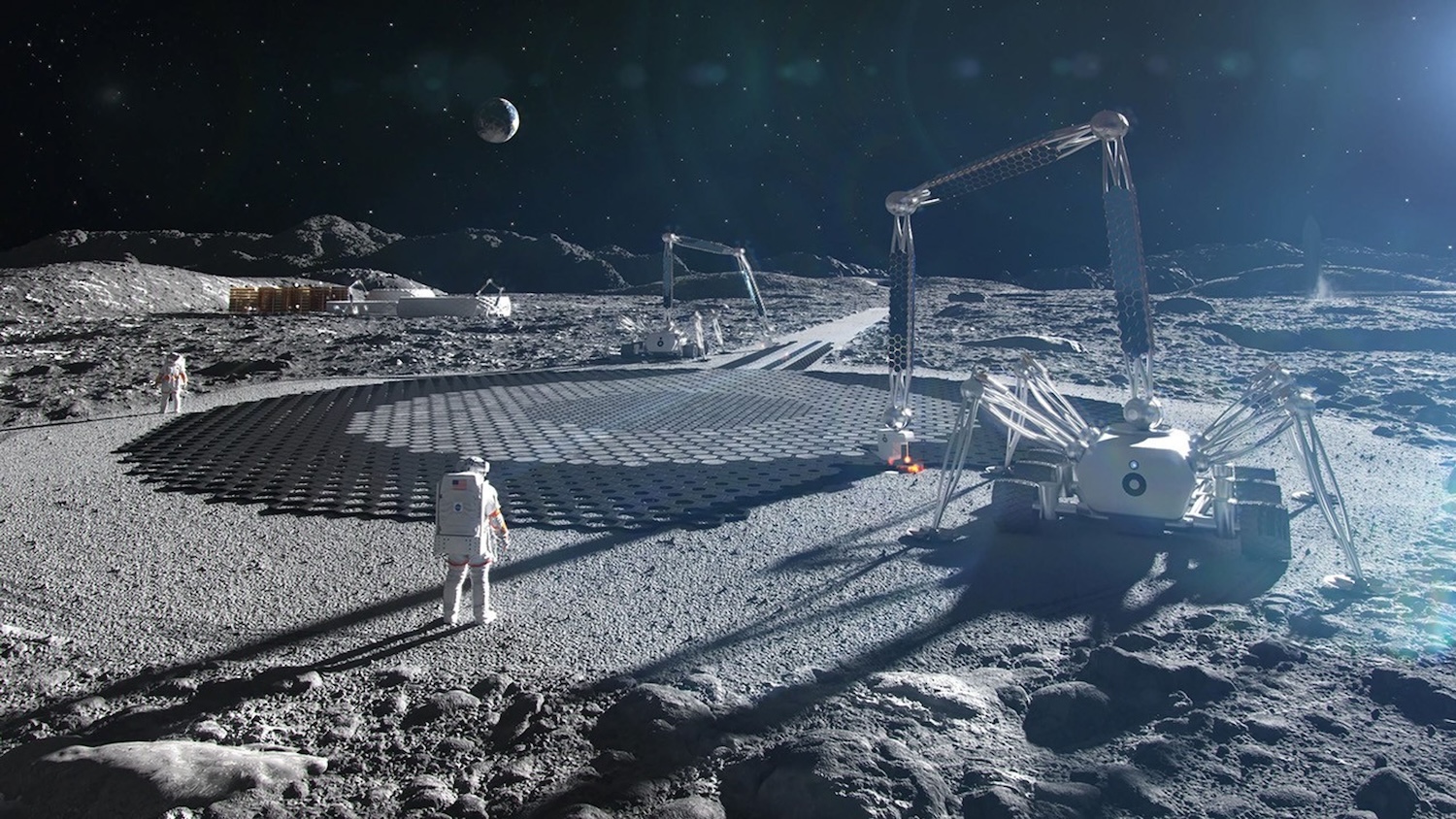
Austin-based firm ICON, meanwhile, has partnered with NASA’s Marshall Space Flight Center under the MMPACT project. Together, they will develop 3D printing technologies for lunar and Martian infrastructure. The company’s Olympus construction system will construct landing pads, roadways, and habitats.
Estimating how long it will take us to colonize the Moon and Mars is tricky.
“It’s hard to give a precise date, because it will largely depend on political will and budget allocations,” Ginés-Palomares said. “Building a permanent lunar habitat could be technically feasible within the next couple of decades, but whether it happens sooner or later will depend on how committed governments are to long-term space exploration. If the momentum continues and key decisions are made wisely today, we could see permanent habitats on the Moon within our lifetimes.”
For engineers on Earth, the Moon is more than a frontier, it’s a lab. What we learn from lunar regolith may shape how we build on our own planet for decades to come.
link